Guarding Project Margins against Scope Drift: Centralize Workflow Governance and Delivery Timelines Natively
Introduction: Why Project Management Software Matters Today
In today’s digitally evolving business ecosystem, using spreadsheets, emails, or disconnected tools to manage projects is outdated. Not only is teamwork on-site, but across different locations, with tighter deadlines and unmatched client expectations. Understanding what project management software does becomes essential for modern organizations.
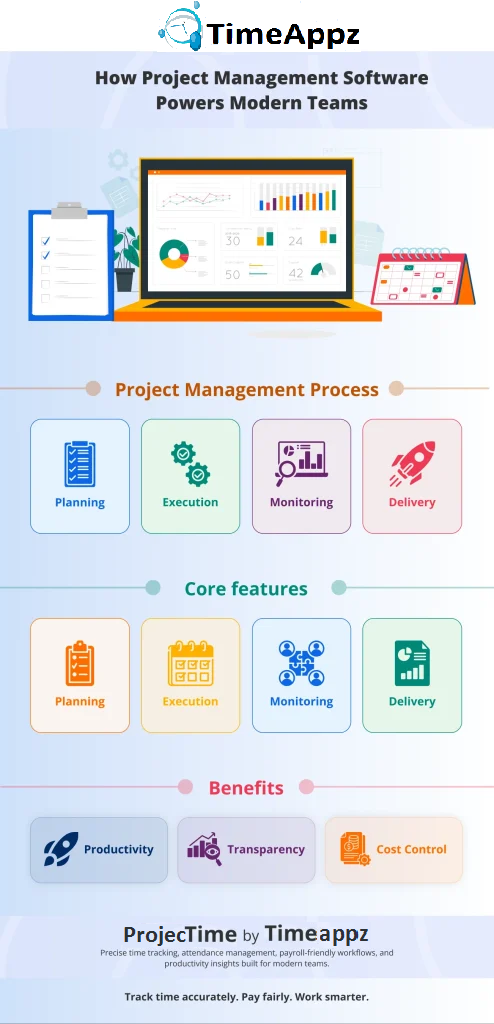
Project management software is defined as a centralized platform with the following key factors:
- It helps the team plan, execute, monitor, and deliver projects efficiently.
- It ensures tasks are correctly assigned, timelines are visible, budgets can be managed, and collaboration remains seamless.
If the right system doesn’t exist, projects could be delayed, costs could be exceeded, or suffer from a lack of clarity.
Whether you are a startup with your first launch or an enterprise handling various products, project management tools bring a coherent structure. With cloud-based project management online software, teams can experience:
- Real-time collaboration.
- Accurately tracking progress.
- Make decisions based on data.
When a business understands its features, it can help them choose the right solution that brings consistency with each project’s success.
What Is Project Management Software?
Project management software is a digital solution designed to help teams or individuals organize, plan, and manage projects from start to end. It is a modern replacement for manual processes, such as spreadsheets, emails, and paper-based planning, with a centralized and automated system.
When asked what does project management software do, the simple answer is: It brings structure, fairness, and control to project execution.
- Clearly define project goals and objectives.
- Break large projects into manageable tasks and subtasks.
- Team members with accountability are assigned responsibilities.
- Deadlines are set to guide progress.
- Visibility into which team or individual is working on what tasks or projects.
- Track the duration of tasks in real-time.
- Monitor the progress of projects to understand if they are going according to plan.
Benefits of Project Management Software:
With this level of clarity, there is reduced confusion, miscommunication, and replicated work.
Modern project management online software is more than basic task tracking. It integrates schedules, budgets, resource allocation, collaboration, and reporting in one platform. With cloud-based solutions, teams can access projects at anytime from any location. This flexibility is valuable for remote and hybrid teams that require real-time updates and proper coordination.
Core Purpose – What Does Project Management Software Do?
To understand what does project management software do, it is important to consider its primary goal: allow teams to complete projects on time, within the planned budget, and with consistent quality. These tools deliver truth, ensuring everyone is working from the same data.
- Detailed project plans.
- Define breakthroughs.
- Visualize timelines.
- Progress of tasks.
- Keeps a record of time spent.
- Compares actual performance with planned goals.
- Teams can look and learn how to analyze performance trends.
- Estimates are improved.
- Workflows are refined for future projects.
Main Functions of Project Management Software
Planing
Project managers can design:
This helps the team understand problems and anticipate delays before they happen.
Execution and Monitoring
Project management software tracks:
With this data, managers can identify hurdles, redistribute resources, or adjust timeliness to keep projects on track.
Supports Continuous Improvement
When historical project data is stored:
The approach driven by data leads to better decisions and long-term efficiency.

Task and Workflow Management
While evaluating what does a project management software do, task and workflow management are key features. It lets teams break large projects into manageable tasks and subtasks, each with its specific owners and deadlines.
- Users can determine responsibilities, set priorities, add files, and leave comments directly to tasks. This allows communication to flow freely, and everyone knows what needs to be done and by when.
- Project management software helps increase efficiency by automating repetitive processes, such as task approvals, status updates, or notifications. For instance, if a task is delivered, the next dependent task can automatically move to the next progress stage.
Features
By using project management online software, workflows gradually become consistent across teams and projects. This reduces errors, improves accountability, and ensures that projects follow best practices from start to finish.
Project Scheduling and Timeline Visibility
An answer to what does a project management software do would be that it manages scheduling and timelines. Those projects that fail due to impractical deadlines or lack progress visibility can be resolved by using scheduling tools that help teams plan work accurately and stay aligned with the target date.
- They offer visual timeline tools that make it easy to understand task dependencies, crucial paths, and delivery dates. Managers can instantly know how delays in one task impact the project.
- It supports strategic decision-making. When workloads become uneven or deadlines shift, project managers can reschedule tasks in real-time to align everything with the set project completion date.
Features
Cloud-based project management online software ensures that changes are visible to stakeholders to prevent confusion and last-minute changes.
Collaboration and Communication
Effective collaboration is an important reason organizations adopt project management tools. When discussing what does project management software do, collaboration ranks highly. When communication at work is centralized, teams come together and work efficiently.
- Team members can comment directly on tasks, share files, and tag colleagues for feedback, without relying on email threads. This reduces misunderstandings and allows discussions specific to deliverables.
- Many platforms integrate chat tools, document management systems, and video conferencing. This creates a digital workspace where collaboration happens naturally. For remote teams, project management online software becomes a factor of daily operations, ensuring alignment regardless of location.
Features
Modern project platforms work best when combined with productivity tools for work, enabling teams to manage tasks, communication, and performance from a unified digital workspace.
Time Tracking and Resource Management
Time tracking answers what does project management do for productivity and cost control. When time spent on tasks and projects is accurately recorded, organizations gain real-time insights into efficiency and resource utilization.
- Project management software consists of a built-in time tracking allows employees to log hours against tasks in real-time.
- Managers can compare estimated versus real efforts, understand inefficiencies, and plan for the future accordingly.
Time Tracking Features
ProjecTime by Timeappz excels by combining cost, time, and project data into a unified system.
- The tools help allocate people, skills, and costs effectively.
- Managers can evaluate employees who are overworked, who has capacity, and how resources are allocated across projects.
Resource Management Features
ProjecTime by Timeappz excels by combining cost, time, and project data into a unified system.
Reporting, Analytics, and Insights
With reporting, project management software demonstrates its strategic value. It provides strategic guidance through real-time analytics.- Reporting dashboards show advanced information about project status, how the budget is utilized, time spent, and performance trends.
- With real-time data, managers can design custom reports for stakeholders, clients, or leadership without manually doing any work.
Features
With accurate reporting, teams can identify risks early, optimize workflows, and continuously improve project outcomes.
An article by Forbes highlights that when an organization invests in digital and data-driven tools, it improves operational efficiency and project outcomes by allowing teams better insights and control, which supports informed decision-making.
Additionally, industry research from McKinsey shows that when digital performance tracking and analytics are integrated into project workflows, it enhances transparency and performance, resulting in better results.
Comparison Table – Manual vs Project Management Software
| Feature | Manual Project Management | Project Management Software |
| Task Tracking | Error-prone spreadsheets | Automated, real-time tracking |
| Collaboration | Email-based, fragmented | Centralized communication |
| Time Tracking | Manual timesheets | Built-in, accurate tracking |
| Reporting | Time-consuming | Instant, data-driven reports |
| Scalability | Limited | Highly scalable |
This comparison clearly illustrates what does project management software do better than manual methods: improving accuracy, efficiency, and scalability.
Why Businesses Need Project Management Software Today
When an organization understands what does project management software do, it reveals why it has become essential for all business sizes. These tools make workflows efficient, enhance collaboration, improve accountability, and deliver strategic results. When projects, time, and data are centralized, organizations operate with confidence and clarity.
Solutions like ProjecTime by Timeappz offer an all-in-one approach that combines project management, time tracking, and reporting into a single platform. For businesses that want to improve efficiency and control costs, adopting the right software is no longer optional; it’s strategic.
Stop guessing and start your optimization process today. Partner with Timeappz for a stronger, efficient workflow built with clarity and truth.
Let our consultants conduct a free workflow audit and recommend a tailored implementation plan. contact ProjecTime by Timeappz today at [email protected] or Live ChatThe Live Chat option is in the bottom-left corner!← Look Left to explore implementation options tailored to your construction operations.
Frequently Asked Questions
What does project management software do for small businesses?
- Project management software enables small businesses to organize tasks, track progress, and effectively manage limited resources. It reduces manual work and gives teams greater visibility across projects. As a result, businesses are efficient with time management and deliver projects on time.
Is project management online software suitable for remote teams?
- Yes, project management online software is ideal for remote teams. It offers real-time collaboration and access from anywhere. Team members can update tasks, track time, and communicate with zero location barriers. This keeps work aligned.
How does project management software improve productivity?
- It does so by centralizing tasks, automating workflows, and providing clear priorities. The goal of project management software is to remove inefficiencies. It integrates with productivity tools at work to streamline daily operations. Teams spend less time working out issues and more time executing.
Can project management software track costs and budgets?
- Yes, many platforms track project costs by combining time tracking and expense management. Managers can monitor budgets in real-time and prevent overruns. Tools like ProjecTime by Timeappz are strong in cost control.
Is project management software only for project managers?
- No, it benefits the entire team, including employees, stakeholders, and leadership. Everyone gains visibility into goals, progress, and responsibilities. This shared understanding improves collaboration and outcomes.
How do I choose the right project management software?
- Start by identifying your team’s needs, such as time tracking, reporting, or collaboration. Evaluate ease of use, scalability, and integration options. Choosing a proven solution like ProjecTime by Timeappz ensures long-term value.
🎯 Move Beyond Fragmented Task Tracking to Total Workflow Sovereignty
Relying on scattered document repositories, localized project boards, or manual update schedules is an expensive operational failure path that invites miscommunication, duplicate admin labor, and unbilled leaks. ProjecTime by TimeAppz unifies clear timeline scheduling, resource capacity logic, and automated client invoicing under one roof. Protect your institutional delivery standards, scale seamlessly on our optimized cloud, or host completely On-Premises behind private secure networks.
Permanently Free Plan
Ideal for small consulting groups or boutique agencies. Holds core timesheets, client tracking, and baseline invoicing tools for up to 2 users and 1 project permanently.
Advanced Workflow Plan
Unlock our 30-Day Full-Feature Trial—no credit card required. Experience multi-project status analytics, custom workflow automation triggers, capacity mapping, and automated client billing.
Related Blogs
 DCAA Timekeeping Requirements: A Practical Guide for Government Contractors
If your organization holds a cost-reimbursable, time-and-materials, or labor-hour government contract
TimeAppz
 Timesheet Reminders: How to Ensure On-Time Submission Every Week
Late timesheet submissions are a management problem before they are an employee
TimeAppz
 Timesheet Approval Process: Best Practices for Teams
A timesheet without an approval is not a reviewed document. It is
TimeAppz