Machine-Learning Labor Allocation: Mitigating Schedule Slippage and Eradicating Under-Staffing Bottlenecks Natively
Understanding Workforce Management Software
Understanding what is workforce management software is essential for organizations aiming to manage labor, enhance performance, and make decisions based on data.
Workforce management software (WFM) refers to unified systems that help businesses predict labor needs, schedule employees, track time and attendance, manage absence, and comply with regulations. These tools automate manual processes such as spreadsheets, and provide real-time data that helps with better decision-making.
Core components include:
- Scheduling algorithms.
- Time clocks.
- Dashboards for analytics.
- Payroll and HR systems integration.
Workforce management software was originally developed for contact centers but has evolved rapidly with Artificial Intelligence (AI) and cloud technology to suit all sectors. It handles hourly workers, remote teams, and shift-based operations. For instance, it utilizes predictive modeling to match staff skills with demand to prevent overstaffing.
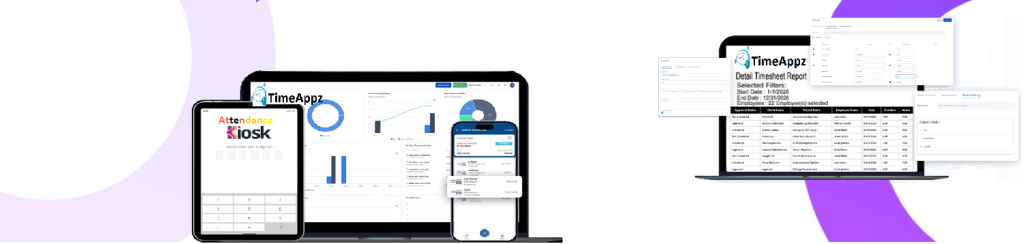
In practice, ProjecTime by Timeappz demonstrates this by tracking hours across 250K+ projects and 2M+ hours, supporting resource planning and PTO management. The cloud-based architecture of this software allows accessibility from any location, making it a good choice for a modern, distributed workforce.
Early workforce management systems were strict desktop applications, but with their growth over time, today’s versions utilize machine learning for adaptive forecasting. They analyse data from:
- Past data.
- Seasonal trends.
- External variables, such as holidays or economic shifts.
This prevents frequent mistakes, such as last-minute issues for coverage or excess idle time, directly translating to cost efficiencies.
Turn Workforce Insights into Operational Control
Explore pricing options or schedule a personalized demo to see how ProjecTime supports workforce management at scale.
Key Features of Workforce Management Software
Understanding what is workforce management software is key to appreciating how these tools support managers and employees in daily operations. Features of Modern Workforce Management Software
- Scheduling is automated.
- Mobile time tracking.
- Labor forecasting.
Employees can clock in and out via applications, request shifts, and view schedules. Managers receive alerts for issues like overtime. Additionally, analytics provide KPIs on absence rates and productivity, allowing strategic adaptations:
- AI-driven tools predict demand based on past data, historical trends, and external factors like weather or sales.
- Compliance training ensures adherence to labor laws, union rules, and overtime caps, which reduce audit risks.
- Integrations with HCM, ERP, and payroll streamline data flow, minimizing errors in the long run.
ProjecTime by Timeappz Real-time notifications keep everyone aligned, from shift swaps to approval workflows. includes digital timesheets, expense tracking, and support for multi-currency that is ideal for global teams. Additional standout features encompass geofencing for location-based clock-ins, preventing buddy punching, and customizable dashboards for role-specific views. Real-time notifications keep everyone aligned, from shift swaps to approval workflows. Moreover, advanced fatigue management tools monitor consecutive shifts to promote well-being, aligning with growing regulations on employee rest. Reporting capabilities generate executive summaries, drill-down analytics, and exportable data for audits or strategic planning
Benefits for Business Efficiency
Understanding what is workforce management software allows organizations to utilize these tools to translate planning into measurable outcomes. Workforce management software improves efficiency by:
- Saving significant amounts per employee annually by optimizing the workforce.
- Reducing payroll costs allows accurate forecasting, and cutting overtime leads to better planning.
- Automating processes frees managers from admin duties and shifts their focus to strategic work.
When tools align resources with demand, productivity increases and reduces exhaustion and understaffing. The market for such software is driven by digital transformation. Key benefits include:
- A 15-25% reduction in labor costs for many users.
- Improved forecast accuracy up to 95%.
- Enhanced employee satisfaction scores. Scalability allows small businesses to start basic and seamlessly adopt enterprise features.
These results are combined from prior tool results, reflecting standard industry outcomes. For example, in retail, workforce management software helps handle busy hours without overstaffing during slow periods, making every shift more efficient. In manufacturing, skill-based scheduling ensures the right employees are assigned to complex tasks. Overall, these tools replace guesswork with data-driven decisions over time. According to Forbes, the U.S. HR software market, including WFM, reached $14.8B with 4.1% annual growth, emphasizing the pivotal role of technology in optimizing workforce operations.
Industry Applications: Focus on Healthcare
Understanding what is workforce management software is important in regulated workplaces like healthcare, where staffing accuracy directly affects patient care. A healthcare time tracking software within workforce management software ensures that:
- The billing is accurate.
- Compliance regulations are understood.
- Staffing involves patient care.
- Tracking shifts for nurses or doctors is accurate.
- Trends for understaffed units are analyzed.
This leads to cost savings, reduced exhaustion, and better satisfaction. ProjecTime by Timeappz provides healthcare time tracking software that integrates easily with existing systems. The combined time data reveal improved shift patterns that motivate teams to work efficiently without extra hours. Healthcare environments operate 24/7 and are required to meet strict regulations, which is where workforce management software automates verification and shift assignments. Moreover, integration with electronic health records (EHR) helps streamline work hours with actual care delivery. Home health providers can confirm field visits with mobile time tracking. This improves billing and Medicare compliance. Overall, healthcare time tracking software minimizes administrative work and ensures the right staff are in place to deliver quality care. Gartner’s 2023 Market Guide workforce management by 2025, aiming for improved employee experience and ROI through better forecasting and labor savings. by 2025, aiming for improved employee experience and ROI through better forecasting and labor savings.
See how ProjecTime supports better time management and organization.
Learn more about our solutions on the Timeappz
Employee Productivity vs Hours Worked
Understanding what is workforce management software helps explain why working longer hours does not always lead to better results. When employee productivity vs hours worked are linked, workforce management software shows that more hours do not equal higher output. It focuses on designing schedules that support maximum efficiency, not exhaustion. ProjecTime by Timeappz provides analytics to measure real productivity, not just time spent working. In demanding fields like tech or consulting, this insight is valuable. Tools like ProjecTime by Timeappz design reports that link output with well-rested teams, helping leaders focus on results instead of long hours
Comparison Table
| Metric | Manual Tracking | WFM Software (e.g., ProjecTime) | Efficiency Gain |
| Scheduling Time/Week | 10-12 hours | 4-5 hours | 60% faster |
| Payroll Processing | 8 hours | 2 hours | 75% saved |
| Compliance Checks | 3 hours | 30 min | 85% efficient |
| Cost Savings/Employee | N/A | Significant/year | High |
| Productivity Drop (60 vs 40 hrs) | N/A | Mitigated | Optimized |
| Forecast Accuracy | 70-80% | 95% | 20% improvement |
| Adoption Rate | Variable | 90%+ in pilots | Rapid uptake |
Implementation of Best Practices
To know which workforce management software works best for your organization or teams’ requirements, consider the following practices:
- Are you working by the hour, or from multiple locations?
- Check if the software can connect with the current system using APIs.
- Begin with testing in one department, train employees with mobile-friendly tools, and expand gradually.
- Track metrics, such as reduced overtime, and whether employees are properly adopting the system.
Start by Understanding Your Needs
- Through labor savings, you can see ROI in a few months.
- Make sure stakeholders are in agreement, plan data migration, and provide regular training.
- Customization includes adjusting roles for union contracts or industry-specific requirements.
- Post-launch, conduct regular audits, and through feedback, you can improve algorithms.
Choose Scalable Solutions
Solutions like ProjecTime by Timeappz provide quick setup and global support.
Challenges and Solutions
Workforce management software comes with its challenges, including employee resistance and system integration problems. Solution: Design mobile-friendly apps and provide training so that adoption becomes easier. Protect data by choosing compliant platforms. Start with low costs. If prior systems create silos, phased API connections can be helpful. Resistance often comes from inexperience, so share success stories to encourage employees. For growing companies, scalability is handled by tools like ProjecTime by Timeappz. Avoid vendor lock-in by selecting platforms that use open standards and allow data to export.
Case Studies and Real-World Impact
Consider the following industries using workforce management software.
- A mid-tier retailer reduced overtime by 30% and increased sales per labor hour by 16%.
- A manufacturing company cut absence by 19% with predictive alerts.
- Healthcare providers who utilized healthcare time tracking software improved billing accuracy by 13%.
Clients using ProjecTime by Timeappz report 30% faster invoicing. These examples show clear ROI—from large corporations to startups. Key lessons: start small, measure results, and improve using data. For Dubai-based operations, workforce management software adapts to multicultural teams, managing different time zones and languages, which boosts efficiency on global platforms.
Future Trends in Workforce Management Software
As AI becomes part of major businesses globally and is evolving at a rapid pace, it will become essential for workforce management software. Future Trends TimeGrip’s 2026 trends confirm that:
- AI can suggest schedules and handle questions via chatbots.
- Edge computing allows for real-time processing.
- “AI-assisted, not AI-replaced” scheduling will dominate by 2026, with 70% of large enterprises adopting AI-WFM.
- IoT integration will be essential for “asset and attendance tracking” as an emerging trend alongside biometrics.
- Blockchain ensures secure records.
- By 2030, workforce management is expected to be autonomous and adaptive.
- It forecasts fully integrated, agentic AI systems as the “new era.”
- Real-time data and API-first architectures enabling instant processing.
Advanced Analytics and Customization
The workforce management software provides analytics with hidden insights, such as when each role is most productive. Custom KPIs, such as billable hours or skill gaps, help accurate management of teams. ProjecTime by Timeappz provides no-code customization with these requirements. For productivity-focused teams, integrate WFM with tools like Jira or Asana to get full visibility across projects and workflows
Conclusion
Knowing what is workforce management software and adapting to it is essential for any business or organization that wants to evolve with new technology.
Workforce management software, such as ProjectTime By Timeappz revolutionizes efficiency by automating scheduling, tracking, and analytics, directly addressing the myths of employee productivity vs hours worked.
Whether you use a healthcare time tracking software or a general-purpose one, it reduces costs and boosts productivity.
Stop guessing and start your optimization process today.
Partner with Timeappz for a stronger, efficient workflow built with clarity and truth.
Let our consultants conduct a free workflow audit and recommend a tailored implementation plan contact ProjecTime by Timeappz today at [email protected] or Live ChatThe Live Chat option is in the bottom-left corner!← Look Left to explore implementation options tailored to your construction operations.
Frequently Asked Questions
What is workforce management software?
- It’s a toolset for scheduling, time tracking, forecasting, and compliance to optimize staff deployment. Businesses use it to align the workforce with demand efficiently.
How does workforce management software improve business efficiency?
- By reducing overstaffing, automating payroll, and providing real-time insights that save substantial costs yearly. It minimizes manual errors and overtime.
Is ProjecTime by Timeappz suitable for healthcare?
- Yes, its healthcare time tracking software handles shifts, attendance, and compliance seamlessly. It supports accurate billing and staffing insights.
What is the difference between employee productivity vs hours worked?
- Productivity measures output quality; extra hours often reduce it due to fatigue. Workforce management software focuses on effective hours.
How much does workforce management software cost?
- It varies by size. Market leaders offer scalable plans with quick ROI via savings. Free trials like ProjecTime help evaluate it.
Can workforce management software handle remote teams?
- Absolutely, with mobile apps for clocking, scheduling, and PTO across locations. It supports hybrid models effectively.
🎯 Move Beyond Unverified Capacity Planning to Absolute Predictive Governance
Allowing your multi-tenant operations, 24/7 facilities, or distributed healthcare fields to run on loose spreadsheets, static calendars, or manual checks is a major financial and ethical liability. It directly forces unmonitored overtime inflation, worker exhaustion, and severe labor cost leakage. ProjecTime by TimeAppz replaces manual friction with a machine-learning capacity forecasting and automated compliance system. Take absolute control of your operational throughput, deploy safely on our optimized cloud, or run completely On-Premises behind private secure firewalls.
Permanently Free Plan
Perfect for small teams and independent local clinics. Holds core timesheets, baseline billing parameters, and support for up to 2 users and 1 project permanently.
Advanced Resource Optimization Plan
Unlock our 30-Day Full-Feature Trial—no credit card required. Experience predictive modeling, machine-learning demand forecasting, geofenced mobile entries, and native EHR/ERP integrations.
Related Blogs
 DCAA Timekeeping Requirements: A Practical Guide for Government Contractors
If your organization holds a cost-reimbursable, time-and-materials, or labor-hour government contract
TimeAppz
 Timesheet Reminders: How to Ensure On-Time Submission Every Week
Late timesheet submissions are a management problem before they are an employee
TimeAppz
 Timesheet Approval Process: Best Practices for Teams
A timesheet without an approval is not a reviewed document. It is
TimeAppz