
How to Track Employee Hours: A Comprehensive Guide to Efficient Time Management Software
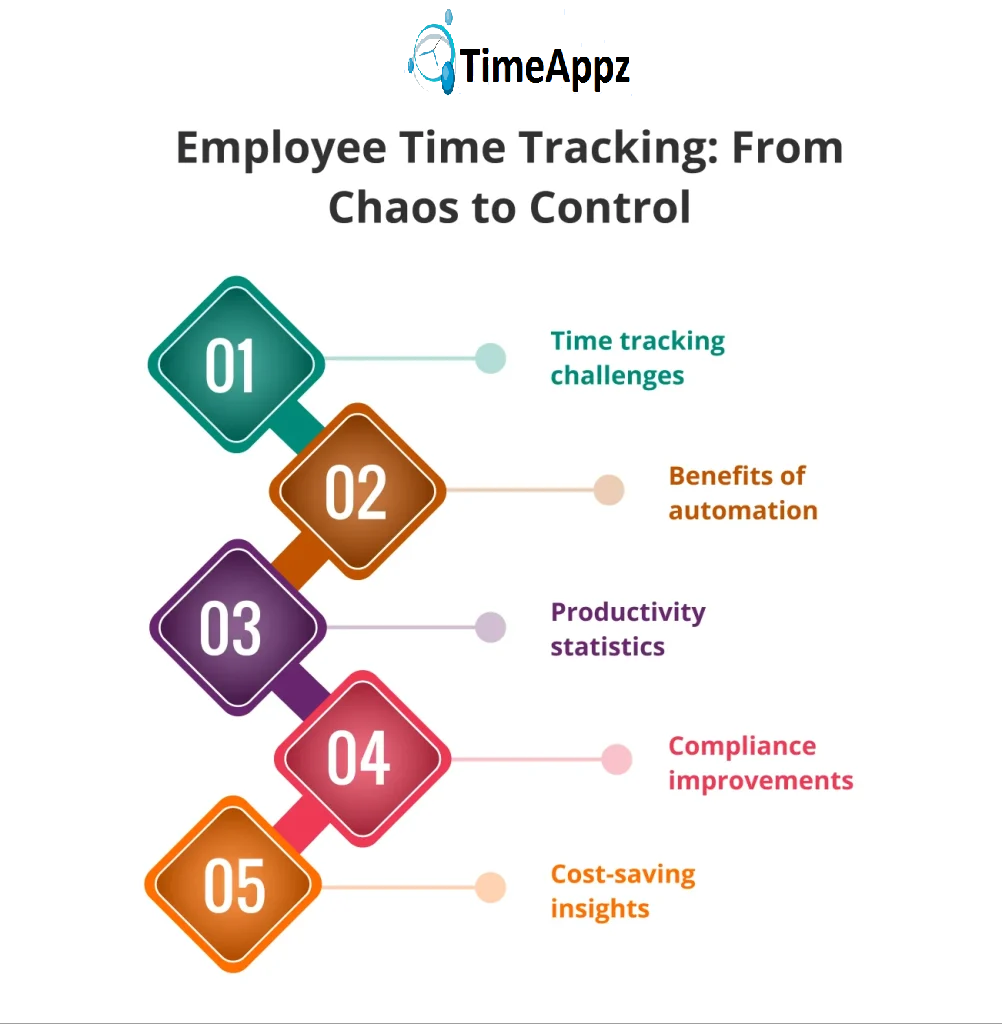
Why Tracking Employee Hours Matters More Than Ever
One of the most valuable and expensive resources of an organization is the time of an employee. This is defined by tracking the number of hours an employee spends on specific tasks or projects in a day, and whether their work is efficient, productive, and valuable to the final goal. Despite knowing the value they bring to an organization, many businesses continue to depend on outdated or inaccurate tracking methods. When work hours are tracked correctly, it can help organizations in the following ways:
- They assure payroll is accurate and overtime calculations are correct.
- They maintain compliance with labor laws.
- They measure productivity and see the workload distribution.
- They can improve project costs and profitability.
- They can reduce time theft and manual errors.
Industry reportshighlight that poor time tracking can be costly. For instance, research shows that time theft and inaccurate time reporting can reduce payroll accuracy by up to 7%, directly eroding profitability and inflating labor costs. However, when automated time tracking systems are utilized, they can improve payroll accuracy by up to 95%, with fewer errors. Businesses that adopt digital solutions also report fewer payroll disputes and easy settlement, with payroll processing times reduced by more than 30% on average due to real-time data and integration with HR systems.
These statistics underline the real financial and operational benefits of transitioning from manual timesheets to modern workforce management tools.
Traditional vs Modern Methods of Tracking Employee Hours
When an organization understands different approaches to tracking, it can help them choose the right solution.
- Increased error rates.
- Approvals are time-consuming.
- Zero real-time visibility.
- They can be easily manipulated.
Manual Time Tracking Methods
Includes paper timesheets, spreadsheets, and punch cards. Limitations:
Manual methods may be efficient for small teams, but as an organization grows, they become inefficient.
- Tracking in real-time.
- Calculations are automated.
- Reporting is accurate.
- Support with compliance.
- Payroll integration is easier.
Automated Time Tracking Software
Modern businesses rely on digital software to track hours. Benefits:
This is where time and attendance hr software becomes essential for growing workforce management.
Key Features to Look for in Employee Time Tracking Software
When an organization evaluates solutions for how to track employee hours, consider the following features: 1. Automated Time Capture Employees clock in and out digitally using mobile, web, or biometric systems. This removes manual entry errors. 2. Attendance & Leave Management When leave, holiday, and absence tracking are integrated, it ensures complete attendance visibility. 3. Overtime & Compliance Controls Automating overtime calculations helps businesses comply with labor laws and avoid penalties. 4. Real-Time Dashboards Managers gain real-time insights into hours worked, attendance schedules, and productivity metrics. 5. Advanced Reporting Custom reports, payroll processing, audits, and performance reviews are reinforced.

How Time Tracking Improves Time Management and Organization
Effective time tracking is connected to time management and organization. When employees know their time is tracked transparently, it encourages them to improve and take responsibility for their work. Some benefits are:
- Tasks are clearly prioritized.
- Multitasking is reduced.
- Project timelines have improved.
- A work-life balance is better.
Organizations that track time effectively see improvements in productivity and employee satisfaction.
Comparison Table: Manual vs Software-Based Time Tracking
| Feature | Manual Tracking | Time Tracking Software |
| Accuracy | Low | High |
| Real-Time Visibility | No | Yes |
| Payroll Integration | No | Yes |
| Compliance Support | Limited | Built-in |
| Reporting | Manual | Automated |
| Scalability | Poor | Excellent |
Common Challenges in Tracking Employee Hours
Despite the importance of time tracking, many organizations struggle with it due to the following reasons:
- Employee Resistance: If tools are not implemented fairly, employees may feel they are under constant surveillance.
- Inaccurate Data: Errors in manual entry led to payroll disputes.
- Compliance Risks: If an organization fails to track overtime, it may result in legal penalties.
- Administrative Burden: HR teams spend more time managing timesheets than focusing on key objectives.
How Software Solves These Challenges
By using modern time and attendance hr software, these problems can be eliminated in the following ways:
- The process of time capture is automated.
- Attendance rules are standardized.
- Records that are provided are audit ready.
- The workload of HR is reduced.
- Employees receive transparency at work.
Apart from automation, modern time and attendance, solutions provide real-time visibility into employee work hours, overtime, and absences, enabling managers to make informed decisions quickly. Employees benefit from self-service access to their time logs, which builds trust and reduces disputes. Additionally, centralized dashboards and automated alerts help HR teams proactively address attendance issues, ensuring smoother operations and improved workforce efficiency across the organization.
Why Businesses Choose ProjecTime by Timeappz
ProjecTime by Timeappz is designed to help organizations track employee hours accurately and efficiently.
- The interface is easy to use for employees.
- Workflow approvals can be customized.
- Billing and payroll are integrated.
- Reporting and analytics are detailed.
Key Benefits
The software is cloud-based and secure.
Facts & Figures (External References)
Research highlights that automated time tracking offers major payroll and compliance benefits. According to Forbes, leading tools that automate employee time capture and reporting help businesses recover more of their billable work and streamline billing accuracy, which makes each hour count toward revenue and productivity. Additionally, industry statistics highlight that digital time tracking can reduce payroll processing time by more than 30% and drastically reduce disputes and errors compared to manual systems.
- Communicate clearly with employees.
- Use software for tracking, not spreadsheets.
- Policies should be transparent.
- Automate approval processes.
- Reports should be reviewed regularly.
Best Practices for Tracking Employee Hours Successfully
Organizations can follow the practices mentioned below to track time accurately.
In addition to these best practices, organizations should provide proper training to ensure employees understand how and why time tracking is implemented. Giving them simple guidelines and ongoing support helps reduce resistance and improves adoption. Additionally, it is important to align time tracking rules with business goals, project requirements, and compliance standards. Regular audits of time data can help identify inconsistencies early and maintain accuracy. When leadership consistently reinforces these practices, time tracking becomes a trusted system rather than a monitoring tool. Consistency and clarity are key to long-term success. Consistency and clarity are key to long-term success.
- Workload planning is predictive.
- Authentication of biometrics.
- AI-powered analytics.
- Payroll is integrated seamlessly.
- Optimization of remote workers.
Future of Employee Time Tracking
The future of how to track employee hours depends on the following factors:
Beyond these advancements, intelligent time tracking systems will increasingly focus on employee experience and adaptability. Tools will allow personalized insights that help employees manage their time more effectively, while managers can make data-driven decisions in real-time. Advanced analytics will not only track hours but also identify burnout risks, productivity trends, and resource gaps before they impact performance. As remote and hybrid work continue to evolve, secure cloud-based platforms will play a crucial role in maintaining visibility without constant observation. Organizations that invest early in smart tracking tools gain a competitive advantage and forecast long-term goals.
Conclusion
For an organization, tracking employee hours accurately is a strategic business advantage, not just an HR function. If the organization has the right tools, it will help improve productivity, maintain compliance, and build an environment of accountability. Along with supporting modern workforce needs, ProjecTime by Timeappz provides a solution designed to simplify employee time tracking. Stop guessing and start your optimization process today. Partner with Timeappz for a stronger, efficient workflow built with clarity and truth. Let our consultants conduct a free workflow audit and recommend a tailored implementation plan contact ProjecTime by Timeappz today at [email protected] or Live ChatThe Live Chat option is in the bottom-left corner!← Look Left to explore implementation options tailored to your construction operations.
Frequently Asked Questions
Why is tracking employee hours important for businesses?
- Tracking employee hours is essential for ensuring payroll accuracy, labor law compliance, and fair compensation. It helps organizations understand how work time is distributed across tasks and projects, identify productivity gaps, and control labor costs. Accurate time records also protect businesses during audits and reduce disputes related to overtime or underpayment.
- To use automated time tracking software instead of manual methods. Digital tools provide real-time data, eliminate calculation errors, and integrate seamlessly with payroll and HR systems. They also allow employees to log time easily while giving managers full visibility into attendance and work patterns.
- Employee time tracking improves productivity by creating awareness of how time is spent throughout the workday. When employees can see how their time is spent, they tend to better and reduce distractions. For managers, time tracking data highlights inefficiencies, supports better workload distribution, and helps teams meet deadlines more consistently.
- Yes, employee time tracking is legal and ethical when implemented transparently and in accordance with labor laws. Employers must clearly communicate tracking policies, explain what data is collected, and use the information responsibly. When done correctly, time tracking protects both the employer and employees by ensuring accurate pay and fair work practices.
- Time tracking software significantly reduces the administrative burden on HR and payroll teams by automating time collection, approvals, and calculations. It minimizes manual errors, simplifies overtime management, and generates ready-to-use payroll reports. This allows HR professionals to focus more on strategic initiatives rather than routine data entry.
- Organizations choose ProjecTime by Timeappz because it offers a reliable, scalable, and user-friendly solution for tracking employee hours. The platform combines time tracking, attendance management, compliance support, and detailed reporting in a system. It is designed to support modern work environments while improving accuracy, efficiency, and workforce transparency.
🎯 Put Your Timesheet Management on Complete Autopilot
Relying on manual human memory to construct administrative records leaves your organization exposed to severe revenue leakage, inaccurate client billing, and delayed payroll cycles. ProjecTime by TimeAppz eliminates the friction by bridging the gap between your team’s actual work stack and your financial ledger. Streamline your operations, satisfy audit oversight parameters, and run securely on our optimized cloud or deploy On-Premises behind private corporate networks.
Permanently Free Plan
Perfect for small teams or independent operators. Includes core timesheets, billing, and support for up to 2 users and 1 project permanently.
Advanced Automation Trial
Unlock our 30-Day Full-Feature Trial—no credit card required. Experience multi-layer calendar syncing, automated webhooks, custom approval gateways, and native Zapier integration.
Related Blogs
 DCAA Timekeeping Requirements: A Practical Guide for Government Contractors
If your organization holds a cost-reimbursable, time-and-materials, or labor-hour government contract
TimeAppz
 Timesheet Reminders: How to Ensure On-Time Submission Every Week
Late timesheet submissions are a management problem before they are an employee
TimeAppz
 Timesheet Approval Process: Best Practices for Teams
A timesheet without an approval is not a reviewed document. It is
TimeAppz