
Capital Optimization via Advanced Labor Analytics: Eliminating the Cognitive Waste and Hidden Revenue Leaks of Untracked Workdays
Introduction
Time management is a term most know but rarely practice as a skill. We have been told repeatedly to plan better, have deadlines, and remain focused, but in reality, these instructions often dissolve the moment the workday begins. Email notifications pile up, meetings are hours long, and tasks show up without notice. By the time the day ends, our plans are never close to what we had imagined in the morning.
This is where time tracking software becomes a necessity.
Good time management often starts with understanding how to use your time efficiently, not how you think it’s used. If teams rely merely on memory or guesswork, planning doesn’t seem realistic. What follows are unclear goals, deadlines cannot be met, and every team member feels overwhelmed.
Time tracking software changes how you feel about your day. It improves a team’s energy by giving you visibility into how your day is spent, understanding which tasks will require more time, and other things that need notice. Once a disorganized team now look at everything clearly and this becomes the ground for effective time management and goal setting.
This article discusses in depth the importance of time tracking, real issues teams face, how tools today resolve these problems, and how your team can use this data to set objectives and boost productivity.
Why Time Management Fails in Most Teams
People may not be bad at managing time, but if they use the time to work on wrong information, everything falls apart. Consider a project you planned with confidence. You might have thought three hours for a task that ended up taking seven, or maybe you didn’t take a break because you were sure you could finish it early. Or maybe you thought that even after staying busy all day, the outcome was not close to the efforts. These issues happen because:
1. People underestimate how long tasks take
We always think about the best-case scenarios. If a task once took three hours, we feel it will be the same every time, and mindfully ignore the revisions and hidden steps.
2. Workflows lack visibility
Managers often fail to understand which team member is overburdened, who has capacity, which task takes the maximum time, and where they get weak. This leads to unjust workloads and unrealistic deadlines.
3. Time leaks happen silently
A two-minute interruption can cost 30 minutes of focus. This adds up as notifications, quick questions or immediate meetings.
4. Goals are not data-driven but set emotionally
If goals are set under pressure or under assumption and not tracked consistently, they fail to meet the actual expectations.
5. Lack of alignment within teams
If teams don’t track their goals or projects, tasks overlap, there are conflicting priorities, and work is never completed on schedule. These issues create a cycle of stress, chaos, and mismanagement. But once teams start tracking their time correctly, and patterns are clear, this visibility becomes the key to smart planning.
Why Time Tracking Software Is Essential for Modern Teams
Time tracking software is not limited to recording hours. It is about allowing teams to make sense of their workflow. As modern workplaces juggle with off-site work, hybrid agendas, multiple tools, and continuous interruptions, manual time tracking never helps. Time tracking software gives you:
- Real-time visibility into work patterns.
- Valid data for predictions and planning.
- Fair distribution of workloads.
- Insights on performance.
- Open and honest communication.
When all team members refer to and work around the same data, goals become clearer. Deadlines look realistic, and teams feel motivated and supported. As a result, there is more confidence, reduced stress, and achievable outcomes.
7 Deep Benefits of Time Tracking Software
Let us dive deeper into why time tracking software can benefit teams.
- 2 hours spent on emails.
- 1 hour gone with admin tasks.
- Meetings without an agenda are taking up all the time.
- Tasks that are delayed beyond the estimated deadlines.
- Irrelevant tasks and interruptions.
- Repeated tasks.
- Productivity blocks.
- Work that needs more attention.
1. Total clarity into daily work
When people come to work, they think they know how to spend their day well until they start tracking it. And then what appears is the truth:
Time tracking software gives a clearly, honest outline of a workday. Along with knowing what you are working on, you are informed about how long each activity takes. This clarity is important for each team member because they can spot:
Clarity is the foundation of time management and goal setting. Once you understand where your time is being spent, you can plan smartly.
- A designer may spend 60% of their time on corrections.
- A project manager might waste 3 hours daily coordinating messages.
- A developer might be left with only 2 hours of real coding time due to continuous meetings.
2. Smarter prioritization that matches reality
If all tasks feel urgent, making a single task a priority is problematic. Time tracking lets teams understand which tasks are progressing. For instance:
The data from the time tracking software allows managers to understand tasks that important and reduce time on low-value work. Instead of finishing everything quickly, teams can complete the important tasks first.
- The number of hours tasks require.
- The actual duration of projects.
- The cause of delays.
- The difference between realistic and unrealistic tasks.
3. Improved time management and goal setting
When a goal is based on truth, it becomes stronger. Time tracking software reveals:
Once everything is clearly visible with the software, you can create goals that are doable, not hopeful. Example: If writing a content roughly takes 3 hours per article draft, then planning for 5 articles per day sounds unrealistic. But planning 2 articles per day with revisions becomes accurate. Accurate goals are equal to a higher success rate. This is where the transformation of time management and goal setting happens; when goals match human potential.
4. Removes guesswork in planning
Accurate planning becomes easier when the team has data from the software. Timelines can be predicted, work can be allocated based on actual hours, and last-minute stress can be eliminated. There would be no more of underestimating the task again or overloading a team member with additional responsibilities. Planning feels smooth, grounded and predictable.
- A specific employee is logging more hours on repeat.
- Some tasks are unexpectedly taking longer.
- Repeated tasks over time.
- Continuous working outside regular work hours.
- Uneven distribution of tasks.
- Reassign tasks and reduce the workload.
- Provide support to team members.
- Adjust deadlines.
5. Prevents burnout by balancing workload
A burnout within a team or a specific team member doesn’t happen overnight. It is a gradual process, often invisible until it takes up the entire energy of the team as a whole. Time tracking reveals early warning signs:
When managers are aware of these patterns, they can intervene quickly to resolve them. They can:
Time tracking is not surveillance, but a protection.
6. Accountability without micro-management
Employees expect freedom, while managers want visibility. Time tracking offers both. Instead of constantly checking each team member, managers can track their progress in real-time. This builds employees trust because they are not watched, and expectations are clear. This creates a work culture of responsibility without pressure.
- Delayed processes.
- Tasks that can be automated.
- Work that brings no value.
- Projects are taking up more time than they should.
- Bottlenecks that slows down the pace of the entire team.
7. Identifies productivity leaks
Most of the productivity issues are small but repetitive. Time tracking helps in identifying:
Once these issues are known, they can be fixed quickly, saving hours every week.
Comparison Table: Manual Tracking vs Time Tracking Software
| Feature | Manual Tracking | Time Tracking Software |
| Accuracy | Low | High |
| Time Required | High | Low |
| Visibility | Minimal | Real-time |
| Reporting | Manual | Automated |
| Goal Setting | Weak | Strong |
| Team Collaboration | Limited | Centralized |
| Error Risk | High | Low |
| Planning Support | Poor | Excellent |
Real World Use Cases
Adding time tracking to your work routine has many benefits for the team, and this becomes a long-term investment for everyone who adapts to this. Managers get visibility in:
- Distribution of workload.
- Efforts of employees.
- Duration of each task.
- Risk areas and how to resolve them.
Managers can finally plan confidently and avoid overloading anyone. HR teams can use time tracking for:
- Attendance.
- Payroll.
- Reviewing performance for every team member.
- Careful planning of resources.
This brings fairness and accuracy. Freelancers often demand more because their efforts seem underestimated. Time tracking helps them with:
- Accurate charging.
- Creating and validating invoices.
- Improving the overall project profitability.
- Predicting their monthly capacity.
Employees understand clearly:
- How to boost productivity.
- How to avoid burnout.
- How to understand and meet expectations.
This creates transparency and trust.
How Timeappz Supports Time Tracking and Goal Setting
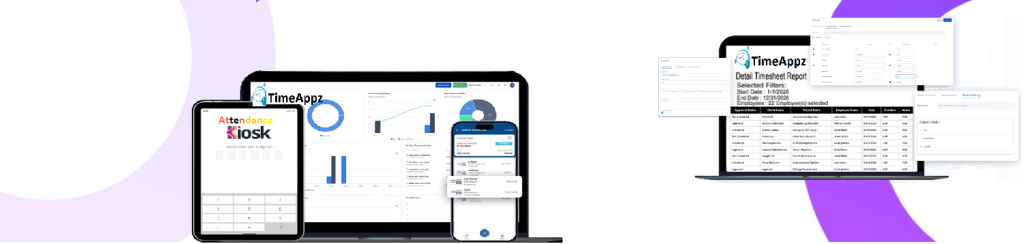
ProjecTime by Timeappz makes time tracking simple by turning complex workflows into neat, measurable activity streams. Instead of maintaining different spreadsheets, notes, and scattered tools, teams get:
- Centralized time tracking.
- Workloads that are visible.
- Insights about performance.
- Automated reporting.
- The capacity to forecast projects.
- Productivity trends.
Timeappz helps the team set goals that can be met based on actual capability and not guesswork. With built-in analytics, teams can monitor time, the problems that cause project delay, and modify plans instantly. Be it a small business wanting to improve its structure or a growing organization aiming for efficiency, Timeappz provides clarity and control you need.
Conclusion
Stop guessing and start your optimization process today.
Partner with Timeappz for a stronger, efficient workflow built with clarity and truth.
Let our consultants conduct a free workflow audit and recommend a tailored implementation plan contact ProjecTime by Timeappz today at [email protected] or Live ChatThe Live Chat option is in the bottom-left corner!← Look Left to explore implementation options tailored to your construction operations.
Frequently Asked Questions
How does time tracking help with time management and goal setting? T
- ime tracking helps you understand where your time is actually spent rather than where you think it goes. By showing you the real patterns, planning becomes accurate, and goals are reachable.
Does time tracking increase productivity?
- Time tracking increases productivity because people can see where their day is spent. This helps them naturally focus better, reduce multitasking, and distractions, and teams can work with clear intentions.
Can time tracking help remote teams?
- Time tracking gives everyone the same level of visibility, no matter where they work from. Remote teams are provided with structure, alignment, and clarity without micromanagement.
Is time tracking complicated?
- It is easy to use time tracking. Tools such as Timeappz are straightforward and automated for daily use. With one click, you can track and generate reports with minimum effort.
Does it help reduce burnout?
- Time tracking exposes the burden of workload before it becomes a problem. Managers can rework tasks early, keeping them healthy and supported.
Can time tracking work for creative teams?
- Time tracking can definitely track work for creative teams. Creative work follows patterns even if the output differs. People like writers, designers, and developers benefit from seeing how much time each creative phases take.
Is time tracking only for large companies?
- Not at all. Time tracking helps freelancers, startups, and small teams benefit from major improvements. It allows them to estimate projects, manage their time smartly, and grow sustainably.
🎯 Move Beyond Chaos to Absolute Structural Work Sovereignty
Allowing your distributed workforce or hybrid projects to run on unverified habits, fragmented text threads, or manual spreadsheet templates is a severe financial and operational liability. It directly breeds employee burnout, delayed milestones, and silent profit erosion. ProjecTime by TimeAppz replaces manual friction with a centralized, automated resource allocation and time tracking platform. Take absolute control of your billable realization metrics, deploy safely on our optimized cloud, or run completely On-Premises behind private company firewalls.
Permanently Free Plan
Tailor-made for independent consulting teams and early-stage boutique agencies. Holds core timesheets, baseline billing features, and support for up to 2 users and 1 project permanently.
Advanced Resource Optimization Plan
Unlock our 30-Day Full-Feature Trial—no credit card required. Experience automated multi-rate workflows, live check-in dashboards, predictive capacity analytics, and native payroll integrations.

Related Blogs
 DCAA Timekeeping Requirements: A Practical Guide for Government Contractors
If your organization holds a cost-reimbursable, time-and-materials, or labor-hour government contract
TimeAppz
 Timesheet Reminders: How to Ensure On-Time Submission Every Week
Late timesheet submissions are a management problem before they are an employee
TimeAppz
 Timesheet Approval Process: Best Practices for Teams
A timesheet without an approval is not a reviewed document. It is
TimeAppz